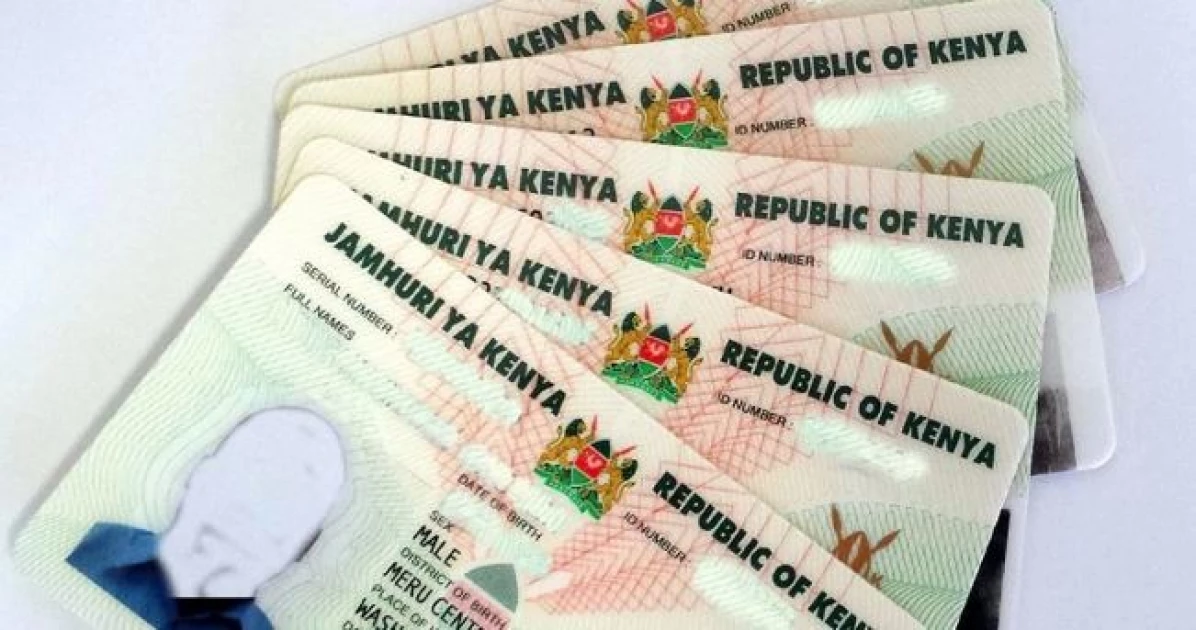
A new set of changes in the issuance of national identity cards has seen the government shorten waiting times, with applicants in Nairobi now able to receive their IDs within hours and others across the country getting theirs within a few days.
The update, announced as part of ongoing reforms in public service delivery, is aimed at making the process faster, simpler, and more accessible after years of delays and backlogs.
Immigration Principal Secretary Belio Kipsang explained that the improvements have been made possible through the introduction of modern systems that have improved how applications are handled and processed. He noted that the upgraded technology now allows the system to move documents through verification and production more efficiently than before.
Speaking during an interview on Friday, April 3, he said Nairobi applicants can now complete the process and receive their identity cards on the same day they apply. He added that applicants in other regions are also benefiting from shorter timelines, with delivery expected within a window of three to seven days depending on location and processing capacity.
“The process has been made faster across the country. Those in Nairobi can even receive their cards on the same day, while others will get theirs within three to seven days. This has been achieved through the technology we have put in place to support the system,” Kipsang said.
He further stated that the government has removed charges that were previously required for both new identity card applications and replacements. The decision follows a directive that eliminated the earlier fees of Sh300 for first-time applications and Sh1,000 for replacement cards, with the aim of easing the financial burden on citizens seeking identification documents.
At the same time, Kipsang addressed concerns that have been circulating in political discussions regarding the issuance of identity cards, particularly claims that the process could be used to influence future elections. He dismissed the claims, insisting that the system follows clear legal procedures that separate citizens from non-citizens.
He clarified that individuals who are not citizens, including refugees and asylum seekers, are processed through a different system and issued with alien cards rather than national identity cards. He emphasized that possession of a national ID remains a requirement for participation in voting, which excludes foreigners from the electoral process.
“For foreigners, there is a clear process they must follow. Refugees are issued with alien cards, not national IDs, and without a Kenyan ID, one cannot vote,” he explained.
The remarks come at a time when discussions continue over the removal of vetting requirements for new applicants, with the government maintaining that the previous approach led to delays and unequal treatment of some citizens during the application process.
In a separate update, Huduma Kenya has urged members of the public to collect identification documents that are ready but remain unclaimed at various service centres. The agency raised concern over the large number of documents that have not been picked despite being processed and available for collection.
According to the agency, tens of thousands of national identity cards, smart driving licences, and birth certificates are still held at government offices across the country. The figures include 152,398 national IDs, 85,550 smart driving licences, and 28,550 birth certificates that have not yet been collected by their owners.
Huduma Kenya encouraged applicants to visit the nearest centres to collect their documents, noting that timely pickup helps reduce congestion at service points and ensures smoother service delivery for new applicants.